Personal Trading SWOT Analysis + Plan
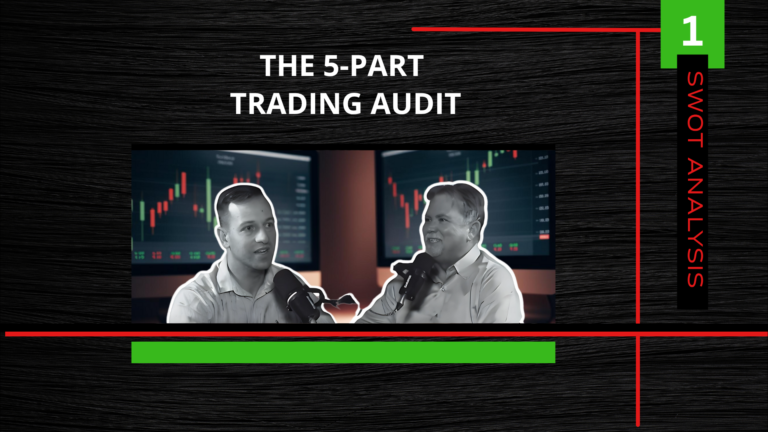
The 5-Part Trading Audit - What's Holding you Back?
Live on Zoom
2025-10-08
7:00 pm
Evaluate your trading through a structured audit covering win rate, strategy alignment, consistency, capital usage, and time investment. You’ll receive a Trading Audit Template to complete privately.
Before you can grow, you need to diagnose. In this kickoff session, we walk through a live trading audit designed to uncover what’s really holding you back from consistent performance. Using a structured 5-part framework, you’ll evaluate:
- Win rate & expectancy – Are your trades mathematically sound?
- Strategy types used – Are your methods aligned with your market?
- Execution consistency – Are you following your rules or freelancing?
- Capital deployment – Are you risking too much, or not enough?
- Time commitment vs returns – Is your effort aligned with your results?
You’ll receive a Trading Audit Template to complete privately after the session. This forms the foundation for your personalized growth path and feeds directly into the next session’s 90-day execution plan.
08
OCT