
Structured Trading Coaching
The Traders Mastermind Strategist Coaching Series
Build the Discipline, Structure, and Edge that Consistent Traders Rely on
Who Is This For?
- Traders who are active but inconsistent.
- Traders stuck in emotional cycles.
- Traders who want structure, accountability, and refinement found in The
Why This Is Different
- We don’t promise fast money.
- We build long-term trading discipline.
- We focus on performance, not prediction.
The Traders Mastermind Templates
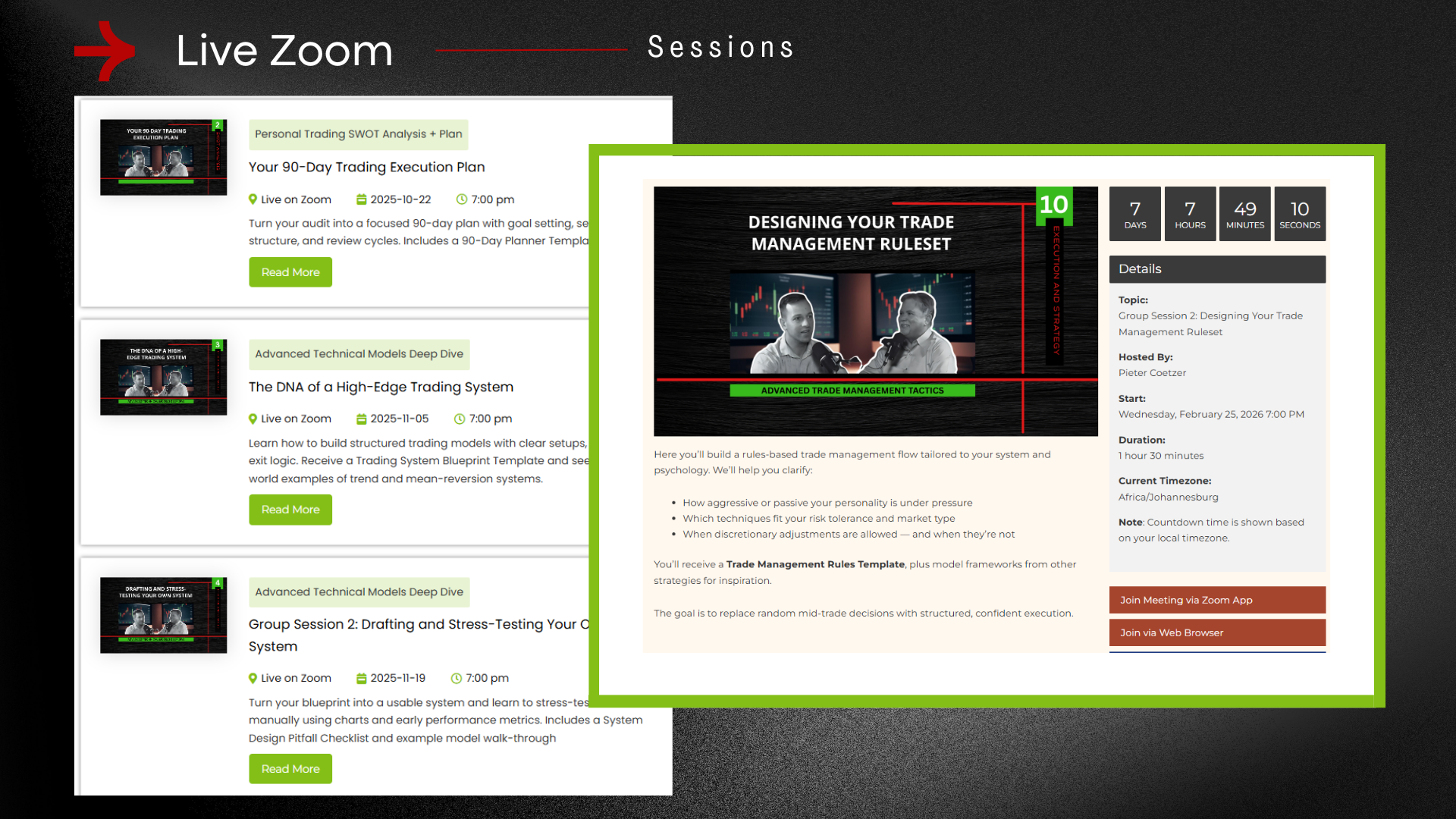
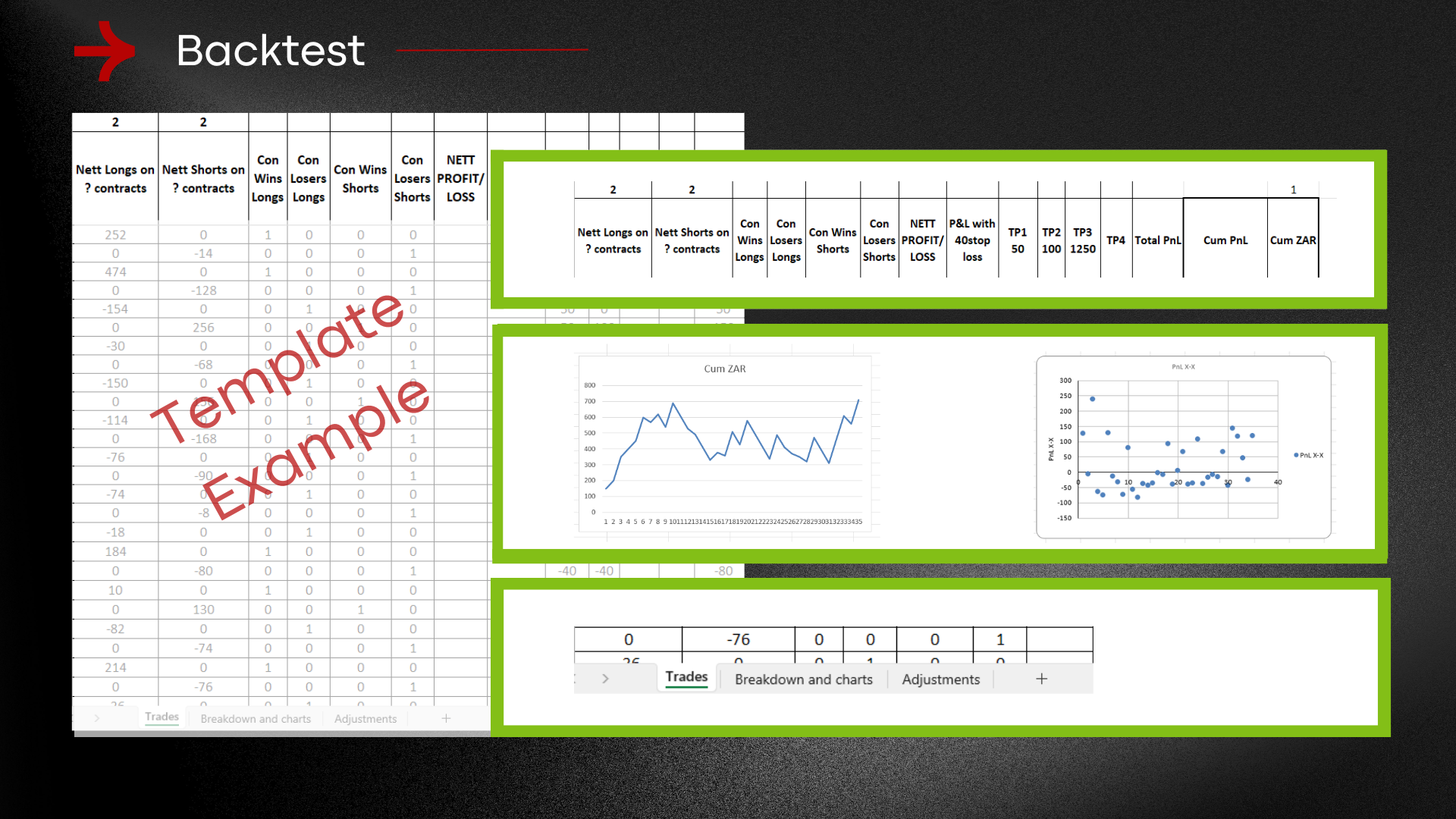
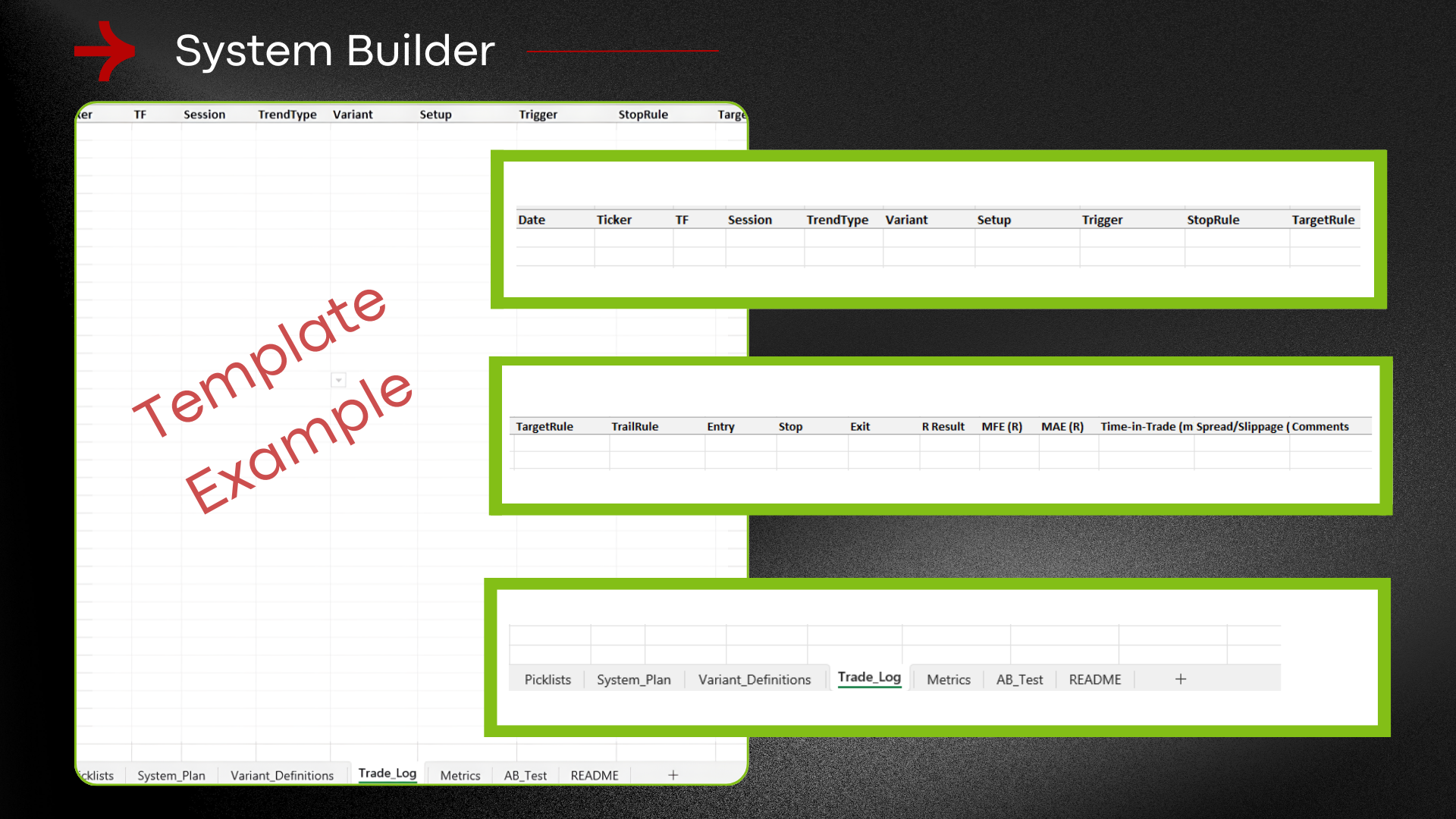
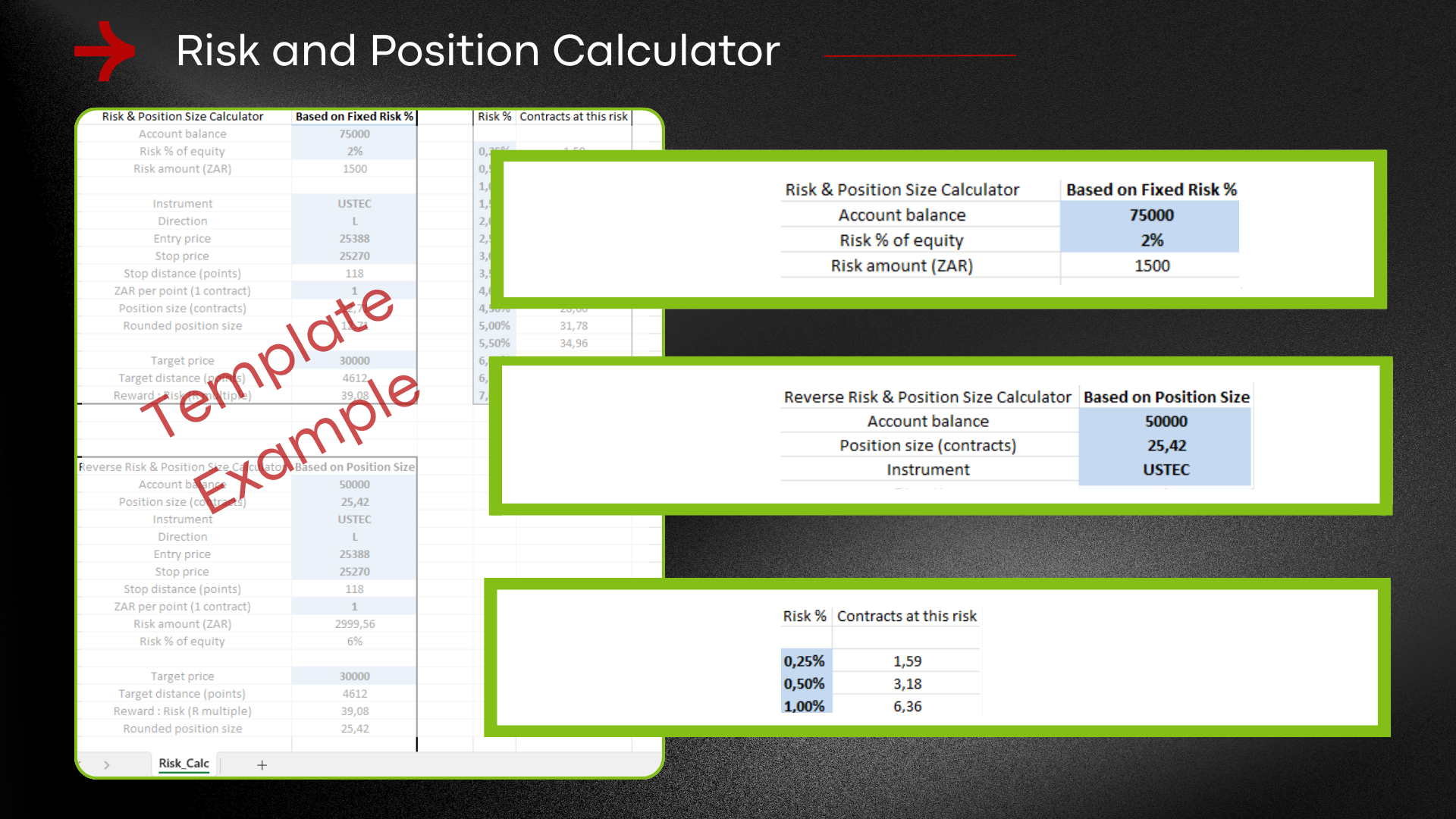
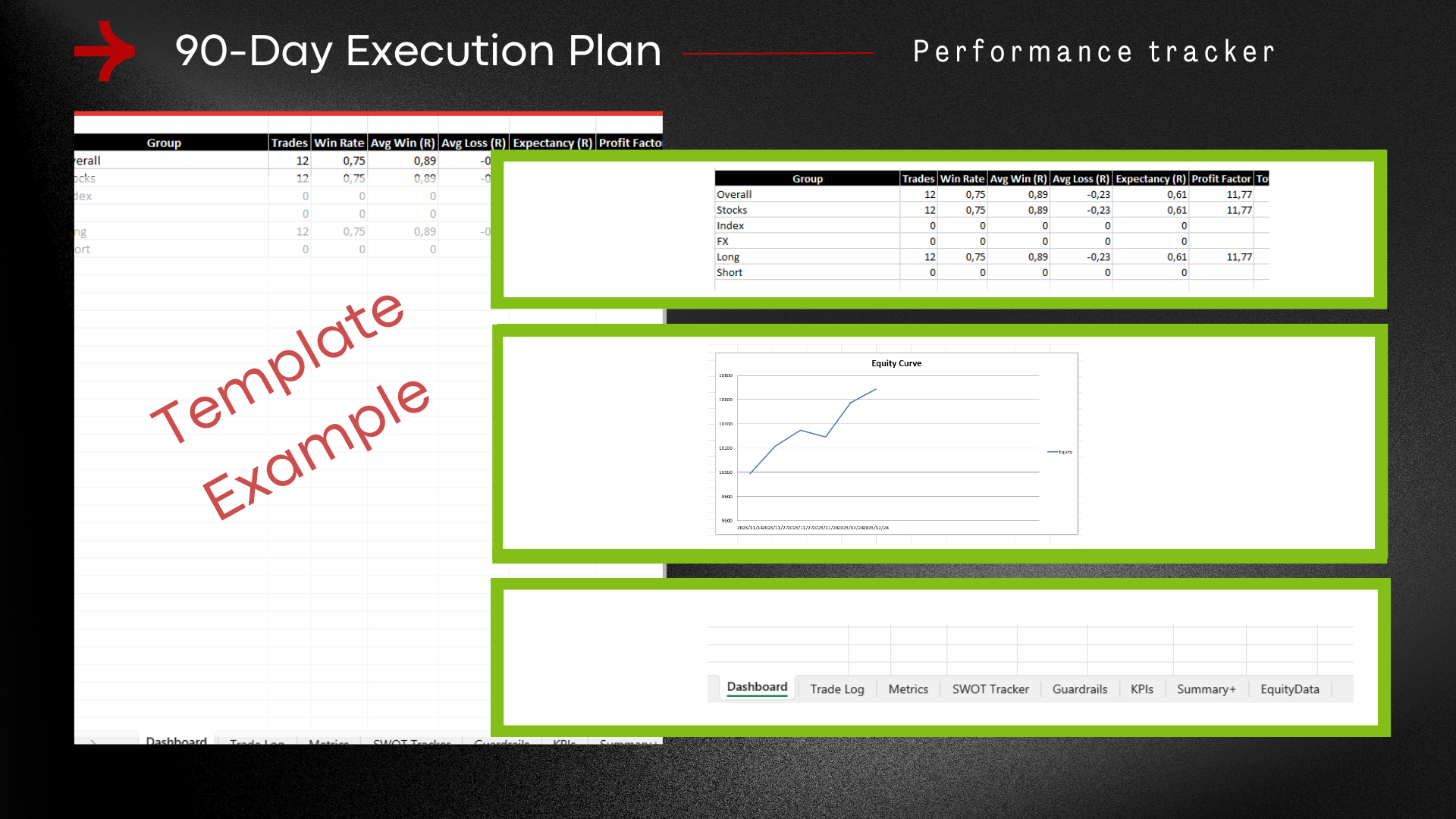
Here's What You Get with your Strategist Membership Every Month
A practical toolkit to design, test, and execute your own system with coaching and accountability.
Each Session includes:
- 2 x Live training and discussion (via Zoom)
- Access to session recording replays
- Downloadable templates and tools
- Supportive trader community engagement.
Educational content only. Trading involves risk. Secure payment via Payfast.
Program Overview
Before you can grow, you need to diagnose. In this kickoff session, we walk through a live trading audit designed to uncover what’s really holding you back from consistent performance. Using a structured 5-part framework, you’ll evaluate:
- Win rate & expectancy – Are your trades mathematically sound?
- Strategy types used – Are your methods aligned with your market?
- Execution consistency – Are you following your rules or freelancing?
- Capital deployment – Are you risking too much, or not enough?
- Time commitment vs returns – Is your effort aligned with your results?
You’ll receive a Trading Audit Template to complete privately after the session. This forms the foundation for your personalized growth path and feeds directly into the next session’s 90-day execution plan.
Now that you’ve identified your key trading bottlenecks, it’s time to build a focused and realistic action plan. In this session, you’ll learn how to design a 90-day trading execution plan that turns your audit results into measurable progress.
Turn your audit into a focused 90-day plan with goal setting, session structure, and review cycles. Includes a 90-Day Planner Template.
We’ll cover:
- Goal setting – Define what success looks like
- Session planning – Structure your daily and weekly trading time
- System review cycles – Set checkpoints for improvement and feedback
You’ll receive a 90-Day Planner Template, along with sample plans to help you get started. One or two volunteers may choose to share their plan for group feedback — completely optional.
In this session, we take a deep dive into how professional traders build advanced technical models that go beyond basic indicators. The goal is to understand what separates a generic setup from a structured, rules-based model with a real edge. Learn how to build structured trading models with clear setups, filters, and exit logic.
You’ll learn the 5 key components that form the backbone of any effective system:
- Market condition filter – Identify the environment your model works in
- Setup trigger – Define precise entry signals
- Confirmation logic – Add filters to reduce noise and false signals
- Entry method – Detail the exact conditions for pulling the trigger
- Exit rules – Create logical stop loss and take profit criteria
We’ll walk through examples of both trend-following and mean-reversion systems to show how these concepts apply in real markets.
You’ll also receive a Trading System Blueprint Template to start drafting your own model.
With your blueprint in hand, we now focus on transforming theory into practice. In this session, you’ll begin designing your own advanced model and stress-test it for logical consistency and clarity.
We’ll cover:
- Translating setups into rule-based logic.
- Manual chart testing to identify edge.
- Key metrics to evaluate system potential (e.g., win rate, reward-to-risk).
- Spotting design flaws before risking real money.
You’ll receive a System Design Pitfall Checklist and see a live example of a technical model being built and stress-tested from scratch.
Sharing your draft system for feedback is optional — the focus is on creating a structure that matches your style, market, and mindset. This is where trading becomes systematic, not just reactive.
Most traders blow up not from bad trades — but from bad risk math. In this session, we break down the concept of risk of ruin and why it’s the #1 silent killer of trading accounts.
You’ll learn:
- The formula for calculating your personal risk of ruin
- Why win rate and payoff ratio are not enough
- How drawdown, capital at risk, and system edge interact
- The truth about why under-capitalised accounts struggle the most
You’ll receive a Risk of Ruin Calculator (Google Sheets) to plug in your stats and see your personal probability of long-term survival or collapse.
Once you understand your risk tolerance and system volatility, it’s time to scale — safely. This session focuses on crafting a risk plan that protects your capital while giving you room to grow.
We’ll cover:
- Creating dynamic position sizing models
- Fixed fractional vs volatility-adjusted risk
- Scaling in/out of trades based on equity growth
- Risk limits: max daily, weekly, and monthly loss rules
You’ll receive a Risk Scaling Template to define your personal rules based on your current account size, strategy, and goals.
This is about becoming a risk manager first — so your trading account survives long enough to thrive.
Even with the best strategy, your mind can sabotage your execution. In this session, we unpack the core emotional and cognitive patterns that lead to inconsistency, hesitation, and tilt.
You’ll explore:
- Fear of loss and the over-avoidance loop
- Revenge trading and frustration cycles
- Overconfidence after wins
- Paralysis from perfectionism or past trauma
You’ll receive a Mental Game Self-Assessment to help identify your dominant pattern and where it most affects your trading behavior.
With awareness comes action. This session helps you build a repeatable psychological routine to stay grounded, focused, and emotionally resilient.
We’ll cover:
- Pre-market routines and mental reset triggers
- Tools like breathwork, affirmations, and journaling
- Post-trade recovery and emotional debrief techniques
- Customizing a “mental fitness checklist” for daily use
You’ll receive a Mental Edge Routine Template and examples of real trader mindset workflows used by top performers.
This is about managing the person behind the system — so your edge shows up when it matters.
Here you’ll build a rules-based trade management flow tailored to your system and psychology. We’ll help you clarify:
- How aggressive or passive your personality is under pressure
- Which techniques fit your risk tolerance and market type
- When discretionary adjustments are allowed — and when they’re not
You’ll receive a Trade Management Rules Template, plus model frameworks from other strategies for inspiration.
The goal is to replace random mid-trade decisions with structured, confident execution.
Different market conditions demand different responses. In this session, you’ll learn how to categorize markets (e.g., trend, range, chop, volatility spike) and map out your tactical responses to each.
We’ll cover:
- How to quickly identify the current environment
- What to do in each: entries, exits, risk
- Examples of playbooks for trend and range systems
- When to sit out vs when to double down
You’ll receive a Market Playbook Template to start capturing your best approaches per condition.
This hands-on session is about building evidence-based playbooks using your own trades and screenshots.
We’ll walk through:
- Collecting examples of successful setups by condition
- What to include: chart image, entry logic, management, outcome
- Creating a digital or printed binder of setups to reference before sessions
You’ll receive a Screenshot Cataloging Guide and an example of a complete mini playbook.
This builds confidence by replacing market guesswork with scenario-based readiness.
Most traders either don’t journal or do it wrong. In this session, we explore how to build a journaling system that’s fast, insightful, and actually improves performance.
We’ll cover:
- What to track (hint: it’s not just win/loss)
- The 3 layers of journaling: data, emotion, and reflection
- Examples of effective trade log formats (manual and digital)
- How to reduce journaling to under 5 minutes per day
You’ll receive a Journaling Template Pack — options for Google Sheets, Notion, and handwritten styles.
Journaling only works if you close the loop. This session focuses on how to extract insights from your log and turn them into weekly or monthly improvements.
You’ll learn:
- Reviewing for patterns in wins and losses
- Tracking strategy drift and rule-breaking
- Creating review rituals (Friday reviews, monthly feedback loops)
- Using tags and notes to filter by setup, time, or emotion
You’ll receive a Journaling Review Cheat Sheet and a Tracker Dashboard Template to monitor consistency over time.
This creates a feedback system that turns experience into actual growth.
No system works in all conditions. In this session, we break down how trend and range markets behave — and how to build strategies designed for each.
You’ll explore:
- How to detect market mode with EMAs, ATR, and price action
- Setup structures that work best in each condition
- Managing entries and exits based on volatility cycles
- When to switch modes — and when to stay out entirely
You’ll receive a Trend/Range Strategy Comparison Guide and a decision tree for identifying current conditions.
Learn how to identify higher highs, higher lows, lower highs, and lower lows so trend direction becomes clearer and more consistent across different charts and markets.
Objectives
- Identify higher highs, higher lows, lower highs, and lower lows
- Read trend direction through structure rather than guesswork
- Separate cleaner structure from noisy price movement
- Understand how pullbacks fit inside trend development
- Build a stronger foundation for reading market structure
Now you’ll take what you’ve learned and refine your system(s) to work better within your preferred market mode.
We’ll cover:
- Adjusting entry filters and exit logic per condition
- Using optional overrides (e.g., range filters in trending systems)
- Creating mode-based trade plans to switch between systems
You’ll receive a Strategy Adjustment Template and access to two sample systems — one trend, one range — to compare and adapt.
This teaches versatility while maintaining structure — essential for long-term edge
Join us for our trading talk podcast every Tuesday.
Topics will be confirmed on the day.
Group Session 1: expanding your trading universe
Most traders over-concentrate — in strategy or market. In this session, we explore how to intelligently diversify across instruments without losing focus.
You’ll learn:
- What diversification actually means in trading (not just asset class)
- How to evaluate which instruments fit your edge
- The pros and cons of Forex, Indices, Share CFDs, and Commodities
- How to filter a watchlist to 3–6 high-fit instruments
You’ll receive a Market Evaluation Checklist to assess what’s tradable for you.
Join us for our trading talk podcast every Tuesday.
Topics will be confirmed on the day.
Learn how to identify meaningful support and resistance zones using swing points, reaction areas, and price structure.
Objectives
- Understand the purpose of support and resistance in chart reading
- Use swing points and reaction areas to mark levels
- Create practical zones instead of cluttering charts with lines
- Recognise major turning points versus minor reactions
- Improve chart clarity through cleaner level selection
Join us for our trading talk podcast every Tuesday.
Topics will be confirmed on the day.
Diversification should amplify your edge, not scatter it. This session helps you create a manageable, focused list of symbols that suit your style.
We’ll cover:
- Creating core and secondary instrument tiers
- Matching systems to market personality (e.g., trending vs volatile)
- Building your daily review plan for multiple instruments
You’ll receive a Multi-Instrument Tracker Sheet and a template for structured market prep across your list.
This keeps your attention sharp while giving you more opportunity flow.
Join us for our trading talk podcast every Tuesday.
Topics will be confirmed on the day.
Build on session 1 by learning when to use candle wicks, when to use bodies, and how to judge whether price is reacting cleanly at an important level.
Objectives
- Know when candle wicks matter more than bodies
- Judge whether price is respecting a level cleanly
- Separate cleaner zones from messy or weak zones
- Recognise when a level has lost relevance
- Use level quality as part of a broader technical view
Many new traders enter the equity market with scattered information. They may understand that a share price is moving, but they do not have a repeatable way to decide whether the share is worth watching, where the trend is, when to enter, where the stop belongs, how much to risk, or when to exit.
Learn how to trade equities and equity CFDs using a structured, rules-based process. This course takes you from the basics of shares and share CFDs through to valuation filters, technical trend analysis, trade triggers, stop placement, position sizing, trade management, and review. The focus is practical: fewer random trades, clearer decisions, and a defined process before any trade is placed.
This course gives the learner a step-by-step framework. Instead of chasing tips or reacting emotionally to chart movement, the learner is taught to filter the market, identify direction, wait for a valid setup, use a trigger, place a structure-based stop, calculate position size, and manage the trade according to rules.
By the end of the course, the learner should have a complete trade-planning process for equities and equity CFDs, including a strategy checklist, position-sizing method, trade worksheet, and review routine.
What Students Will Learn
- The difference between owning shares and trading share CFDs.
- How margin, leverage, exposure, spread, overnight financing, and dividend adjustments affect CFD trades.
- How to use simple valuation ratios as filters, not entry signals.
- How to use the 8, 21, and 89 EMAs to define momentum and trend context.
- How to draw support and resistance zones using candle bodies and wicks.
- How to apply a rules-based EMA strategy for long and short setups.
- How to place stops using market structure instead of a fixed percentage.
- How to calculate position size from entry, stop, and account risk.
- How to manage trades using structure, support/resistance, reward checks, and exit rules.
- How to journal and review trades so the strategy can improve over time.
- How dividend-related share CFD trading works at an introductory advanced level.
Join us for our trading talk podcast every Tuesday.
Topics will be confirmed on the day.
Scaling is more than increasing size — it’s about upgrading your process. In this session, you’ll learn what it means to operate like a professional with larger capital.
We’ll cover:
- The difference between scaling systems vs scaling size
- Risk compression and compounding models
- Managing emotions as trade size increases
- When to adjust systems for capital tiers (R10k vs R100k vs R1m+)
You’ll receive a Scaling Strategy Map to plan your next capital level with structure.
- What equity CFDs are
- Difference between share ownership and CFD exposure
- Margin, leverage, exposure and swap costs
- Long and short CFD positions
- Dividend adjustments on CFD trades
- Trend identification using 21 EMA and 89 EMA
- Trade triggers using the 8 EMA and 21 EMA
- Support, resistance and trend continuation setups
- Stop-loss planning and trailing stop logic
- Position sizing based on account risk and stop distance
- Using rules to create a repeatable trading process
Join us for our trading talk podcast every Tuesday.
Topics will be confirmed on the day.
Learn how moving averages can be used to read trend condition, pullback quality, and chart structure more effectively.
Objectives
- Understand what the 8, 21, and 89 EMA can show on a chart
- Use EMAs to judge basic trend condition
- Recognise pullbacks into dynamic support or resistance areas
- Improve chart reading by combining EMAs with price structure
- Avoid relying on moving averages in isolation
Your Trading Coaches

Pieter’s trading journey began in 2016 while studying for his BCom in Business Management, where a live trading group and automated systems sparked his passion for the markets.
By 2018, he was trading full-time — focusing on long-term trends and international equities. His approach is built on patience, strategic positioning, and the power of compounding returns.
At Traders Mastermind, Pieter shares these principles through targeted sessions, helping members apply proven strategies with confidence in real market conditions.

With over 20 years in the markets, Warren has traded it all — from stocks and indices to forex.
He’s trained hundreds of traders, served as Head Market Analyst for IG Markets, and shared his insights on CNBC Africa and leading radio stations.
From 2015 to 2024, Warren coached clients at Standard Bank Securities, running technical analysis webinars and workshops, while also contributing to ABSA Bank’s educational programs.
Today, he’s laser-focused on one thing: helping traders master the markets with proven strategies and clear, actionable training.
They fail because they’re operating without structure, feedback, or weekly accountability.
What’s the one thing you wish someone had taught you earlier in your trading journey?
Member Reviews
Help others make informed decisions.
Verified Feedback
Real-World Insights
Your Voice Matters
I joined the Traders Mastermind course recently. What an awesome experience, the amount of knowledge that is being shared is unbelievable and life changing. Thanks to Pieter an Warren for all the hours spent preparing and gathering trading material and putting systems together. The truth is if it wasn't for the time spent with the team and all the help, I think I would have just been another statistic, the traders that gave up... Thanks to everyone at The Traders Mastermind - those mentioned and not mentioned you all had an input in what I have achieved... Thanks!
Build your system.
Trade it with discipline.
You need one process, applied consistently.
A practical toolkit to design, test, and execute your own system with coaching and accountability.
Your Strategist Membership Includes:
Each Session includes:
2 x Live Sessions and discussion (via Zoom) per month.
Access to session recording replays, playbooks and checklists.
Downloadable templates and tools.
Expert guidance and supportive trader community engagement.
Cancel anytime.
Educational content only. Trading involves risk. Secure payment via Payfast.